


Domaine Guilbert-Gillet
His domaine covers 3.6 hectares in and around the village. Since 2021 he has been taking vines off the wire and putting each one back on its own échalas, a single wooden stake. In the cellar there is no recipe, and each barrel goes into bottle as it is, through a chèvre à deux becs, the traditional method. He got his love of the old ways and their tools from Jacky Truchot.
At a glance
BASED IN
Savigny-lès-Beaune
Côte de Beaune, Burgundy
FOUNDED
2020
By Benjamin Guilbert, with René Gillet
UNDER VINE
3.6 hectares
Five more with Clos de la Chapelle from 2026
FARMING
In conversion to organic
Certified from 2027
THE RANGE
Eleven cuvées
Thirteen more from Clos de la Chapelle
ON ÉCHALAS
Seventy ares
Another 1.2 hectares over the winter of 2026–27
The story
He did not inherit a row of vines


Benjamin Guilbert did not inherit any vines. Almost everyone making wine in Burgundy did, so he learned the trade elsewhere first. He studied oenology in Mâcon, took the oenologue diploma in Montpellier, then spent a Master of Science with the OIV that took him through twenty-five countries. Along the way he spent time in cellars across France: Smith Haut Lafitte and Haut-Brion in Bordeaux, Guigal in the northern Rhône, Ferret in the Mâconnais, Clos des Lambrays and de Montille on the Côte d’Or, and Trimbach and Zind-Humbrecht in Alsace. Ask him where he learned the most and he says Trimbach.
His mentor is Jacky Truchot. Benjamin’s first Truchot was a Clos Sorbè 2005, in New York, and they met later. Visit after visit, they became friends.
Vineyard and cellar
Seventy ares on échalas, and each barrel bottled as it is


Savigny is cut in two by the Rhoin. On the Pernand-Vergelesses side the slope faces south, on gravelly soils; opposite, the land turns towards Beaune, limestone running to sand. Some of the vines go back a long way: Aux Petits Liards was planted in 1936, the year before Savigny-lès-Beaune became an appellation.
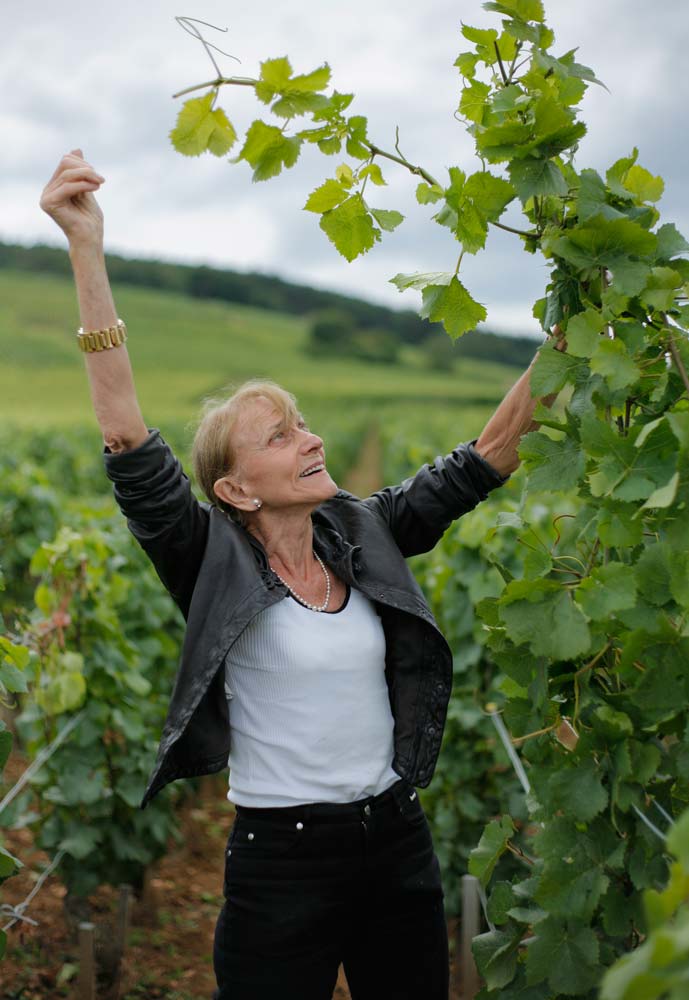
In 2021 Benjamin began taking vines off the wire and putting each back on its own échalas, a single wooden stake. The reason is shade: a vine on an échalas grows up and then falls over itself, so the canopy covers bunches that would otherwise scorch. He brought the idea back from the Rhône, where he had worked at Guigal.
Seventy ares are farmed that way now, by hand and by horse, and the shoots are never hedged, only plaited over. He means to take half the domaine onto échalas, and another 1.2 hectares go over in the winter of 2026–27.
Every red is destemmed, and the fruit is sorted three times before it reaches the vat. Fermentation is in open stainless vats, and there is no recipe: the cuvaison runs from thirteen to twenty days, according to what the vintage has given him.
The wines spend eighteen months in barrel without being racked, and the reds are neither fined nor filtered. Nothing is blended in tank before bottling: each barrel goes into bottle as it is, through the chèvre, by hand, at about nine hundred bottles a day, and on a descending moon.


From the combes above Les Gollardes to the banks of the Rhoin
The range runs from Bourgogne Aligoté to two premiers crus, Les Peuillets and Les Rouvrettes. Three of the names are made in both colours: Bourgogne Les Perrières, the village Savigny and Les Peuillets. All eleven are domaine cuvées as of the 2026 vintage. Some of the parcels are small and the range is wide for the size of the domaine, so not every cuvée is made every year.
Regional
Bourgogne Aligoté “Aux Boutières” Vieilles Vignes
White
+
Bourgogne “Les Perrières”
Red
+
Bourgogne “Les Perrières”
White
+
Village
Savigny-lès-Beaune
Red
+
Savigny-lès-Beaune
White
+
Savigny-lès-Beaune “Les Planchots du Nord”
Red
+
Savigny-lès-Beaune “Aux Petits Liards” Vieilles Vignes
Red
+
Savigny-lès-Beaune “Les Échalas”
Red
+
Premier Cru
Savigny-lès-Beaune 1er Cru “Les Peuillets”
Red
+
Savigny-lès-Beaune 1er Cru “Les Peuillets”
White
+
Savigny-lès-Beaune 1er Cru “Les Rouvrettes” Vieilles Vignes
Red
+
Benjamin also owns Domaine du Clos de la Chapelle, in Volnay, Pommard, Beaune, Meursault, Pernand-Vergelesses and Corton. From 2027 he will have vines in the Côte de Nuits as well: Clos de la Roche, the Morey-Saint-Denis premier cru Les Millandes and Chambolle-Musigny.
Benjamin does not send his wines to critics, so there are no reviews or scores to quote here.
The second estate
Domaine du Clos de la Chapelle

In June 2026 Benjamin bought Domaine du Clos de la Chapelle, in Volnay, and takes it on from the 2026 harvest. The Clos itself is a premier cru of 0.56 hectares above the chapel it is named for, surrounded by monopoles, and its history has been traced back to 1425. Victor Boillot founded the domaine on it in the 1860s and the family held it for nearly a century and a half. The wines are made in the Savigny cellar, and over the winter of 2026 the Clos goes onto échalas.
Corton-Charlemagne Grand Cru
0.30 ha
Corton Bressandes Grand Cru
0.20 ha
Pernand-Vergelesses 1er Cru Sous Frétille
0.13 ha
Beaune 1er Cru Champs Pimont
0.63 ha
Pommard 1er Cru Les Chanlins
0.30 ha
Pommard 1er Cru Les Grands Épenots
0.23 ha
Pommard Rue au Port, very old vines
0.15 ha
Volnay 1er Cru Clos de la Chapelle, monopole
0.56 ha
Volnay 1er Cru En Carelle
0.25 ha
Volnay 1er Cru Santenots du Milieu
0.25 ha
Volnay 1er Cru Taillepieds
0.47 ha
Meursault 1er Cru Charmes, in Charmes-Dessous
0.125 ha
Meursault Les Vignes Blanches
0.41 ha
In person
The same bottle, three years apart
My first encounter with Benjamin’s wine came in much the same way as Guiborat’s, through my good friend Arthur, who kindly brought a bottle of 2020 Aligoté, Benjamin’s inaugural vintage. It tasted way more serious than I was expecting, and it came in a bottle I would not have expected from a newcomer. Fast forward three years, and I was served the exact same bottle in the early summer of 2026, this time in Puligny, brought by Benjamin and Caroline themselves.
The following day Benjamin had us taste the 2025s from barrel, and it was fascinating to understand his philosophy: he does not follow a recipe year in, year out; he constantly adapts. He believes in old tools and tested techniques, with no interest in the latest gadget to add to the cellar. Later that summer I went back to give them a hand at the harvest, which is where you understand that behind Benjamin, the face of the domaine, Caroline is the secret weapon.
Benjamin always had reservations about the UK market, and never appointed anyone to represent him here. This is why I am incredibly proud to be the first one to bring his wines to the UK.
Terroirs


GET IN TOUCH
Talk to us about allocations, listings, or the wines themselves.
Trade
For sommeliers, restaurants,
hotels and merchants.
Allocations, pricing and
account opening.
About
Who’s behind Terroirs, and
how the portfolio is built.
Contact
How to reach us, and where
to find the company details.
↑
☰